If you’ve spent any time in detailing forums or watched a few YouTube breakdowns, you’ve probably noticed a recurring theme: everyone obsesses over PSI. It’s on the box in giant letters, it’s the first number people ask about, and it’s honestly the wrong thing to chase if your goal is a swirl-free, scratch-free finish. The best pressure washer for car detailing isn’t the one that hits the highest PSI rating. It’s the one that delivers strong, steady water flow at a moderate, controlled pressure — because flow is what actually rinses contamination away, and excess pressure is what puts your clear coat at risk.
Let’s walk through what actually matters, why the industry has shifted its thinking on this, and how to pick a unit that fits how you actually wash cars.
Why PSI Isn’t the Number That Matters Most
Pressure washers are marketed almost entirely on PSI (pounds per square inch), because it’s an easy number to slap on a box and compare. But for automotive work, PSI is really just a measure of stripping force. Crank it too high and you’re not cleaning more effectively — you’re just increasing the odds of lifting wax, damaging trim, chipping touched-up paint, or driving grit across the surface hard enough to leave marring behind.
What you actually want in a car-washing context is flow — measured in GPM (gallons per minute) — because flow is what carries dirt, road grime, and rinsed-off soap away from the paint. A machine with high flow and moderate pressure creates that thick “wall of water” effect that rinses in a single pass, rather than a thin, stinging jet that dwells on one spot and does more harm than good.
This is why most experienced detailers land somewhere in the 1,200 to 1,900 PSI range for exterior washing, paired with as much GPM as the unit can reasonably provide. Anything much beyond 2,000 PSI starts working against you unless you’re using a wide fan tip and keeping real distance from the surface.
The Role a Pressure Washer Actually Plays in a Wash
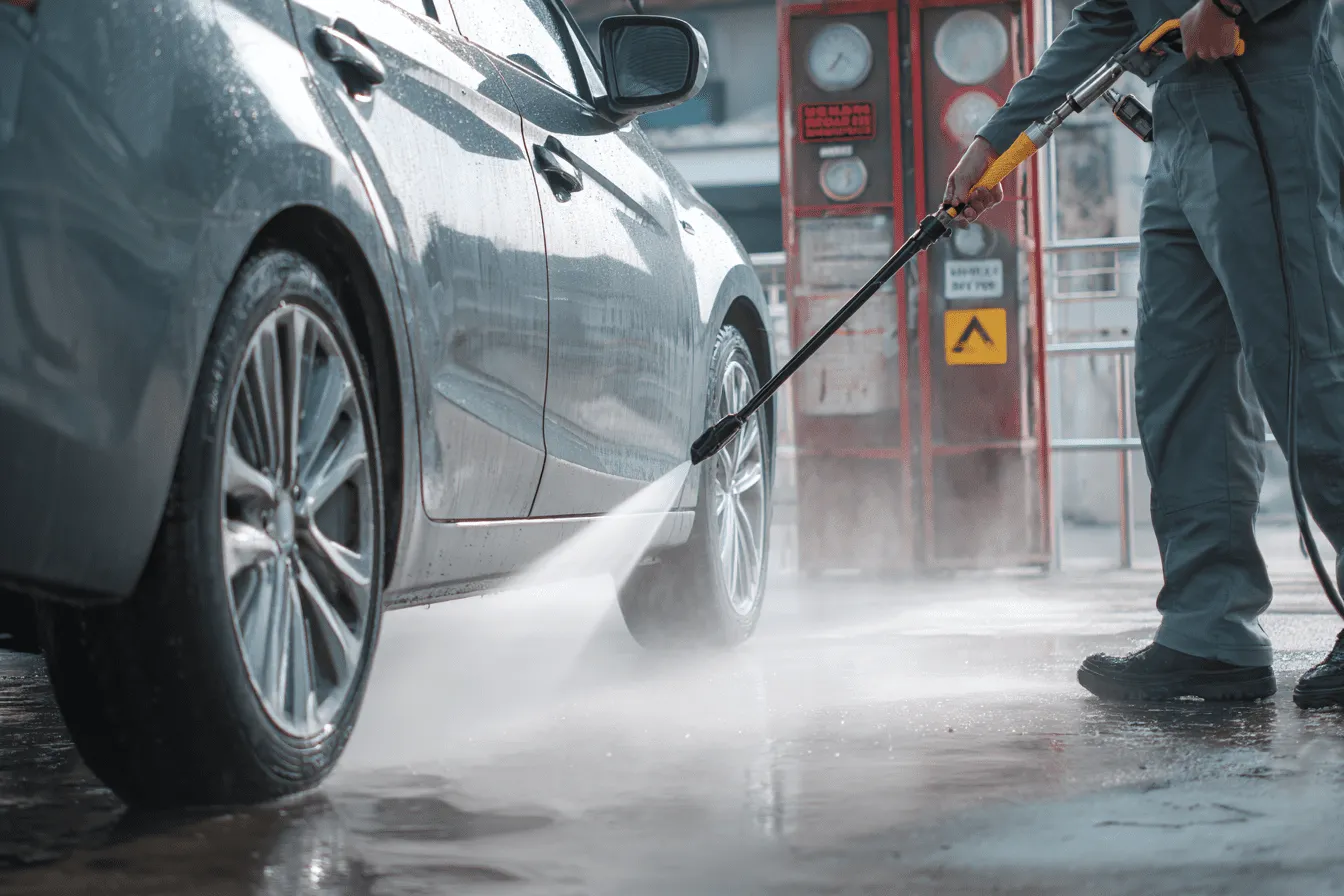
A pressure washer isn’t there to scrub your car clean through raw force — that’s what your wash mitt, your two-bucket method, and your chemistry are for. In a proper contactless or low-contact wash, the pressure washer handles three jobs: it does the initial rinse to knock loose surface debris before anything touches the paint, it applies foam through a cannon or foamer attachment to let the soap dwell and encapsulate dirt, and it performs the final rinse to flush that dirt and soap off without dragging it across the finish. Used this way, a pressure washer actually reduces the risk of scratching compared to a straight hose-and-bucket wash, because it removes more of the abrasive grit before your mitt ever makes contact.
Electric vs. Gas: Which Makes More Sense for Car Detailing
For anyone washing cars — whether that’s a weekend hobbyist or someone running a mobile detailing side business — electric pressure washers are almost always the better fit. Gas units are built for concrete, siding, and heavy-duty stripping jobs, and they typically run well above 3,000 PSI with far less fine control. That’s more power than a paint job needs, and the extra weight, noise, and fumes don’t add any real benefit for vehicle work. Electric units are quieter, more compact, easier to store, and generally easier to dial in for the lower-pressure, higher-flow setup that detailing calls for.
The one place gas units still make sense is larger-scale operations doing multiple vehicles a day with heavy engine bay degreasing or baked-on grime, where hot water capability and higher sustained output start to matter. For most home garages and mobile detailers, though, a well-built electric unit will outperform expectations.
Key Specs to Actually Look At
Flow Rate (GPM)
This is the spec worth prioritizing. A unit producing somewhere around 1.5 to 2.0 GPM will rinse noticeably faster and produce thicker, more effective foam through a cannon than a typical big-box unit stuck around 1.0 to 1.2 GPM. If a listing only advertises PSI and buries or omits the flow rate, treat that as a red flag rather than an oversight.
Pressure Range and Adjustability
Look for a machine that lets you dial pressure down for foam application and up (modestly) for stubborn wheel grime or an engine bay, rather than a fixed-output unit that only does one thing. Adjustable nozzles or a variable pressure dial give you far more control across different parts of the car.
Pump Quality and Duty Cycle
Cheaper units tend to use smaller, less durable pumps that struggle with sustained use and are prone to surging or overheating. If you’re washing a car every week or two, a machine with a sturdier pump — metal fittings instead of plastic, a reasonable duty-cycle rating — will hold up far longer than a bargain-bin unit that’s really built for occasional patio cleaning.
Portability
If you’re mobile detailing or just moving the unit around a driveway, weight and wheel design matter more than people expect. A compact unit under roughly 20 to 30 pounds with a low center of gravity is easier to maneuver around a vehicle without tipping, and it’s far more practical to load into a vehicle for on-location jobs than a shop-sized unit meant to stay put.
Foam Cannon Compatibility
Not every pressure washer plays nicely with every foam cannon — thread sizes and flow requirements vary. Before buying, check that the unit’s outlet fitting matches (or has an adapter for) standard 1/4-inch quick-connect foam cannons, since a mismatch here is one of the most common frustrations new buyers run into.
Matching the Washer to How You Actually Wash
Occasional Home Use
If you’re washing one or two personal vehicles every few weeks, you don’t need a commercial-grade machine. A reliable electric unit in the 1,400 to 2,000 PSI range with a solid foam cannon setup is plenty, and it keeps the investment reasonable.
Weekly Detailing or a Small Side Business
If you’re washing multiple cars regularly, it’s worth spending more upfront for a machine with a genuinely higher flow rate and a more durable pump — the kind built with vehicle care specifically in mind rather than adapted from general-purpose cleaning equipment. The difference shows up in foam thickness, rinse speed, and how long the unit lasts before the pump starts to falter.
Mobile Detailing Operations
Weight, portability, and reliable output under repeated use become the deciding factors here. A compact, wheel-mounted electric unit that you can load and unload easily, paired with a longer hose so you’re not constantly repositioning the machine, tends to be the practical choice over a heavier, shop-based setup.
A Quick Word on Technique
Even the right machine can cause damage if it’s used incorrectly. Keep the nozzle moving rather than dwelling in one spot, favor a wider fan tip (25 to 40 degrees) over a narrow, concentrated stream, and keep reasonable distance from the surface — closer isn’t better once you’re within a foot or so of the paint. If you’re rinsing around an engine bay, cover sensitive electronics first and keep the pressure low. And unless the manual explicitly states the unit is hot-water rated, never connect it to a hot water source — it will damage the seals and shorten the pump’s life considerably.
The Bottom Line
There isn’t a single “best” pressure washer that fits everyone, but there is a clear principle that should guide the decision: prioritize flow and control over raw pressure. An electric unit delivering solid GPM, adjustable pressure, a durable pump, and clean foam cannon compatibility will serve a car detailing routine far better than whatever machine happens to have the biggest PSI number on the shelf. Match that core spec to your actual usage — occasional home washes, weekly detailing, or mobile work — and the rest of the decision becomes a lot more straightforward.