Short answer: sometimes, and it depends entirely on how deep that scratch actually goes. I’ve had customers pull into the shop convinced their car needs a full repaint over a mark that buffs out in five minutes, and I’ve had others insist “it’s just a scratch” when they’re looking at bare metal. Knowing the difference saves you money and sets the right expectations before you book anything.
What “Detailing” Actually Means for Scratch Removal
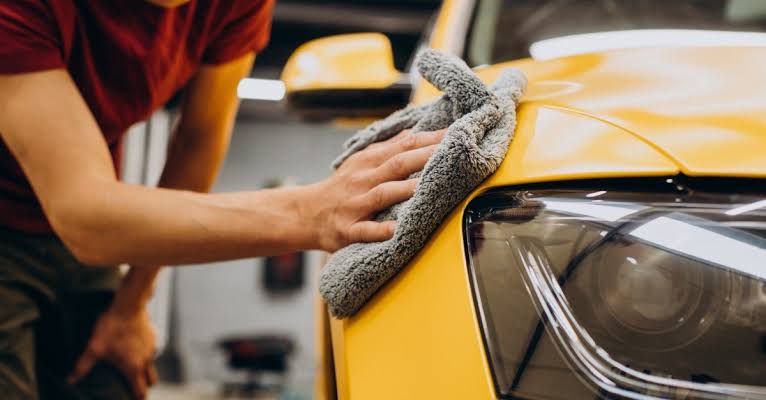
Detailing isn’t one single service — it’s a range of processes, and only some of them touch scratches at all. A basic wash-and-wax package won’t do anything for a scratch beyond maybe making it less noticeable under direct light. What actually removes scratches is machine polishing (sometimes called paint correction), which uses an abrasive compound and a rotary or dual-action polisher to level out the clear coat around the damage.
So when someone asks “can detailing remove scratches,” the real question is whether the detailer is including paint correction in the package. A lot of shops sell “scratch removal” as an add-on precisely because it takes more time, skill, and product than a standard detail.
The Layers of Your Paint Determine Everything
Modern automotive paint is built in layers: the base color coat, and on top of that, a clear coat that provides gloss and UV protection. Nearly all scratches you see are sitting in that clear coat, not the actual color layer underneath — unless the damage is severe.
Here’s how that breaks down in practice:
Clear Coat Scratches
These are the ones a detailer can genuinely fix. If you run your fingernail over the scratch and it doesn’t catch or snag, that’s a good sign it hasn’t broken through. Machine polishing removes a microscopic layer of clear coat evenly across the panel, which levels out the scratch until it’s no longer visible. This is the bread and butter of paint correction work.
Scratches That Reach the Base Coat or Primer
If you can see a different color at the bottom of the scratch — white primer, gray primer, or bare metal — polishing alone won’t fix it. You’re now looking at a wet-sand and repaint of that section, or at minimum a touch-up paint pen followed by clear coat and blending. No amount of buffing brings color back once it’s gone.
Deep Gouges
These go past the primer into bare metal or plastic. This is a bodywork repair, not a detailing job. Trying to polish these out just wastes product and time.
How Detailers Actually Test Depth Before Promising Results
Anyone who’s done this for a living has a routine before quoting scratch work. I run a fingernail test across the mark, then check it under a raking light — a bright LED held at an angle across the panel shows depth far better than overhead shop lighting does. Some shops use a paint depth gauge to measure clear coat thickness first, especially on older vehicles that may have already been polished multiple times over the years. That matters because clear coat is finite. Correct it too many times and you’ll eventually polish through it, which turns a small scratch into a much bigger, more expensive problem.
What the Process Looks Like in the Shop
For a genuine clear-coat scratch, the typical workflow goes something like this:
- Wash and decontaminate the panel — clay bar or chemical decon to strip bonded contaminants before anything touches the paint with an abrasive.
- Inspect under proper lighting to confirm the scratch is isolated to clear coat.
- Test a small compound and pad combination on a hidden section first.
- Machine polish the affected area, working in sections, checking progress as you go.
- Follow with a finishing polish to restore gloss and remove any haze from the correction step.
- Apply a sealant or wax to protect the freshly corrected paint.
This isn’t a rushed process, and it shouldn’t be. Correction done too aggressively or too fast is how you end up with swirl marks or heat damage instead of a fixed scratch.
Swirl Marks Versus Scratches
Worth separating these because people use the terms interchangeably. Swirl marks are a web of fine, shallow scratches usually caused by improper washing or drying technique — think dirty wash mitts or automatic car washes with worn brushes. They respond very well to polishing because they’re shallow and uniform across the panel. A single, deeper scratch from a key, a shopping cart, or a branch is a more isolated repair and may need more targeted attention, sometimes even wet sanding a small localized area before polishing.
Can You Remove Scratches Yourself?
You can, to a point. Consumer-grade scratch removal products and dual-action polishers designed for home use are genuinely capable of correcting light clear coat scratches and swirls. The risk is technique: too much pressure, the wrong pad, or working one spot too long generates heat that can burn through the clear coat, especially on panels with factory clear coat that’s already thin from age or sun exposure. If you’re going the DIY route, work in small sections, keep the polisher moving, and always test in an inconspicuous spot first.
For anything where you can feel the scratch with a fingernail, or where color is visible in the groove, that’s the point to hand it to a professional rather than risk making the repair worse.
What to Ask a Detailer Before Booking
A few questions separate a good outcome from a disappointing one:
- Will they inspect the scratch under proper lighting before quoting a price?
- Are they quoting a single-stage polish or a full multi-stage correction?
- Do they measure paint thickness on vehicles with unknown history or prior corrections?
- What’s included afterward — a sealant, ceramic coating, or just a wax?
A shop that quotes scratch removal sight unseen, without inspecting the panel first, is either guessing or planning to upsell you once the car’s already there.
The Bottom Line
Detailing can remove scratches, but only the ones living in the clear coat. Deeper damage that reaches paint or primer needs a repair process, not a polish. The real value of a good detailer isn’t just running a buffer — it’s correctly diagnosing what kind of damage you’re dealing with before any product touches your paint, so you’re not paying for a service that was never going to fix the problem in the first place.