If you’ve ever dropped your car off for a wash and come back to find someone offering you a “detailing package” for three times the price, you’ve probably wondered what exactly you’re paying for. It’s a fair question, and the confusion is understandable — a lot of shops throw the word around loosely, which waters down what it actually means.
Detailing isn’t just a fancier car wash. It’s a systematic, multi-stage process of cleaning, correcting, and protecting every surface of a vehicle — inside and out — to a standard well beyond what a rinse-and-dry at the gas station will ever achieve.
The Real Definition of Car Detailing
At its core, detailing means restoring and maintaining a vehicle’s appearance and surfaces at a much deeper level than routine washing. The term comes from paying attention to the “details” — every panel, seam, vent, and crevice — rather than just the parts that are obviously dirty.
A wash removes surface dirt. Detailing goes after things a wash can’t touch: embedded contaminants in the paint, oxidation on trim, UV damage on plastics, ground-in stains in carpet fibers, and buildup in places most people forget exist, like door jambs or the underside of a spoiler.
The distinction matters because it changes both the process and the expected outcome. A wash takes twenty minutes. A proper detail can take anywhere from two hours to two full days, depending on the vehicle’s condition and the scope of work.
Exterior Detailing
Exterior detailing typically involves several stages performed in sequence:
- Pre-wash and decontamination — loosening dirt and grime with a foam pre-soak, then washing using the two-bucket method to avoid reintroducing swirl marks.
- Chemical decontamination — using an iron remover to dissolve embedded brake dust particles, followed by a clay bar or clay mitt to pull out bonded contaminants the wash didn’t remove.
- Paint correction — machine polishing to reduce swirl marks, light scratches, and oxidation. This step is often skipped in cheaper packages because it’s the most time- and skill-intensive part of the job.
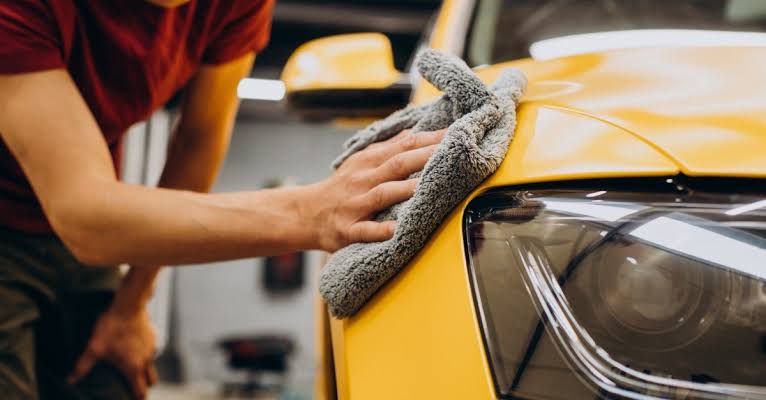
- Protection — applying wax, paint sealant, or a ceramic coating to shield the paint and give it that deep, wet-look shine.
- Wheels, tires, and glass — degreasing wheel faces and barrels, dressing tires, and cleaning glass without leaving streaks.
Interior Detailing
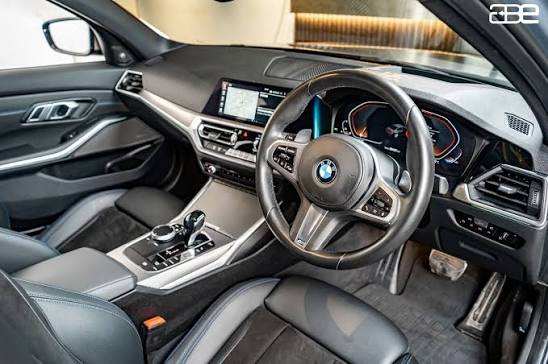
Interior work follows a similar logic — clean deeply, then protect:
- Vacuuming with attachments to get into seat tracks, under pedals, and along door sills
- Steam cleaning or hot water extraction for carpets and upholstery
- Leather cleaning and conditioning to prevent cracking
- Cleaning air vents, buttons, and touchscreens without damaging electronics
- Odor removal, which sometimes requires ozone treatment for stubborn smells like smoke
How Detailing Differs From a Standard Car Wash
This is where most of the confusion happens, so it’s worth being direct about it.
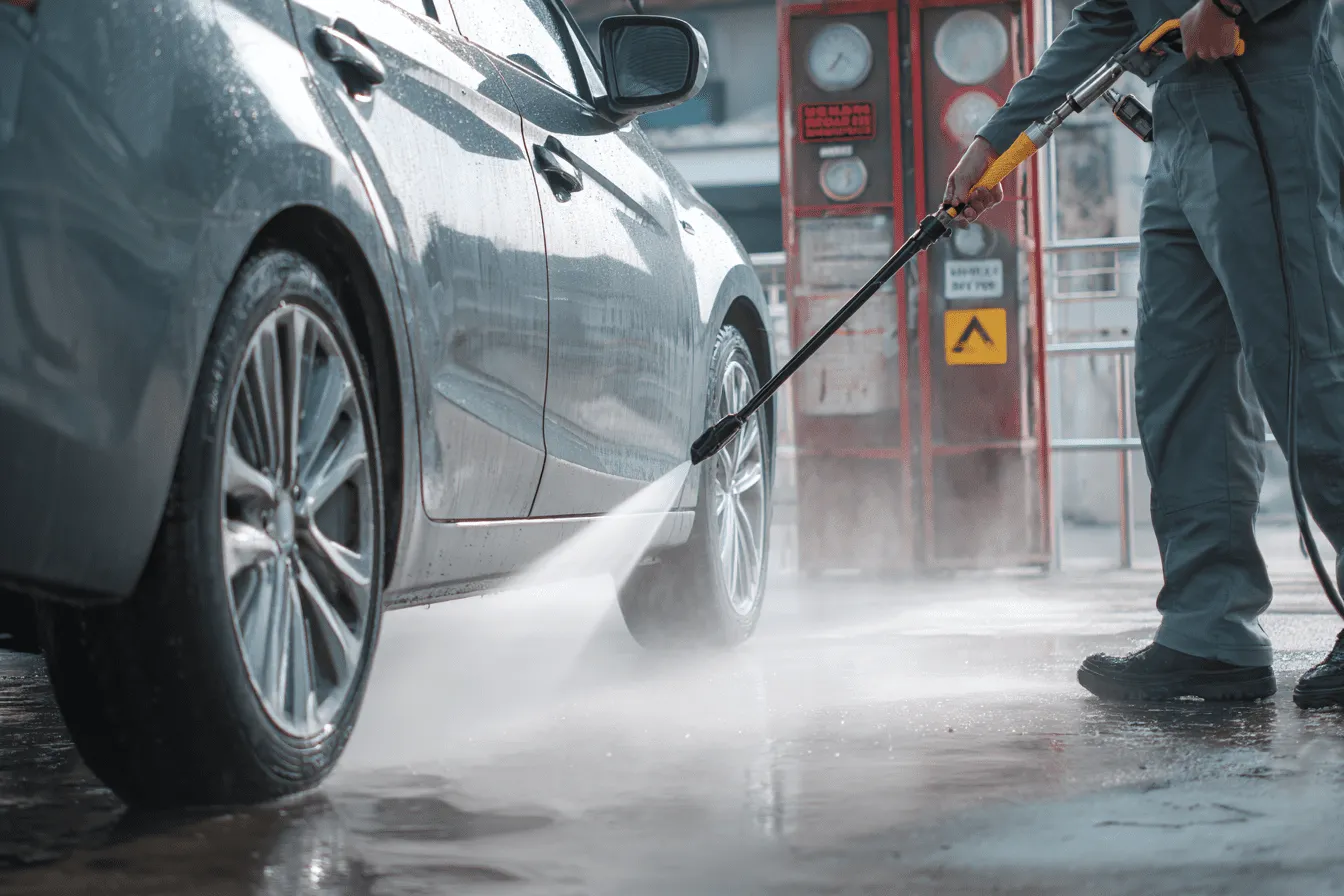
A car wash — whether it’s a drive-through tunnel or a hand wash at a gas station — is designed for speed and volume. It removes loose dirt and gives the car a quick shine. That’s genuinely useful for regular maintenance, but it does nothing for the paint’s actual condition underneath the surface grime.
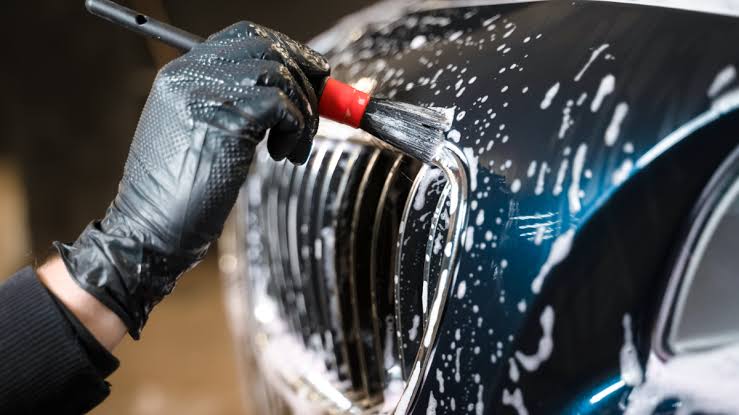
Detailing is slower by design. A detailer isn’t trying to move to the next car in five minutes; they’re working panel by panel, often inspecting the paint under specific lighting to catch defects a wash would never reveal. The tools are different too — clay bars, dual-action polishers, pH-balanced chemicals suited to specific surfaces, and microfiber towels rated for different tasks so cross-contamination doesn’t happen.
Price reflects this. A wash might run $15–30. A full interior-and-exterior detail commonly falls between $150 and $400, and correction-heavy jobs on neglected paint can run higher still, since machine polishing alone can take several hours on a single vehicle.
Types of Detailing Services
Not every car needs the same level of service, and understanding the tiers helps you avoid overpaying or underdelivering on what you actually need.
Basic or Maintenance Detail
This is for a car that’s already in decent shape and just needs upkeep — a thorough wash, interior vacuum and wipe-down, tire dressing, and maybe a spray wax. It’s meant to be done every few weeks or months to keep a car looking maintained without the time investment of a full correction.
Full Detail
This covers everything mentioned above — decontamination, paint correction, deep interior cleaning, and a protective layer. It’s the service most people mean when they say “get my car detailed,” and it’s typically recommended once or twice a year, or before selling a vehicle.
Paint Correction and Ceramic Coating
These are specialized, higher-end services often sold separately from a standard detail. Paint correction is the machine-polishing process that removes swirl marks and light scratches by leveling the clear coat. Ceramic coatings are liquid polymer products applied after correction that bond to the paint and provide a hard, hydrophobic protective layer — lasting anywhere from one to several years depending on the product and maintenance.
It’s worth noting that ceramic coatings don’t prevent rock chips or deep scratches; they primarily improve resistance to chemical staining, UV fading, and make the surface easier to clean.
Why People Get Their Cars Detailed
The reasons go beyond vanity, though a clean car certainly feels better to drive.
Regular detailing protects resale value. A car with well-maintained paint and an interior free of stains and odors will consistently appraise higher than an identical model with neglected surfaces — dealers and private buyers both notice this immediately during an inspection.
It also protects the vehicle itself. Contaminants left on paint can etch into the clear coat over time. Dirt and grit trapped in carpet fibers accelerate wear. UV exposure without protection dries out and cracks dashboards and trim faster than most owners expect.
And for some owners, it’s simply about maintaining a standard — treating the car as something worth caring for properly rather than letting neglect compound over years of ownership.
How Often Should You Get Your Car Detailed?
There’s no single universal answer, since it depends on driving conditions, where the car is parked, and how much you use it. That said, a reasonable baseline for most drivers:
- Maintenance detail: every 4–6 weeks
- Full detail: every 6–12 months
- Paint correction: as needed, typically every 1–3 years depending on how well the paint is protected in between
Vehicles kept outdoors, driven in coastal areas, or exposed to road salt in winter climates need more frequent attention, since environmental contaminants accumulate faster in those conditions.
Final Thoughts
Detailing, in plain terms, is the difference between a car that looks clean and a car whose surfaces are actually restored, protected, and maintained at a level that holds up over time. It’s a process built on attention to the parts of a vehicle that are easy to overlook — which, fittingly, is exactly where the term comes from.
Understanding what you’re paying for makes it much easier to know what to ask for next time you book a service, and to spot the difference between a shop that’s doing the work properly and one that’s just charging detailing prices for wash-level results.